Why One Crew From Dirt to Roof Keeps a Custom Home on Schedule
Most schedule slips happen in the gaps between trades, and a custom home has several of them.
October 7, 2026 · 3 min read
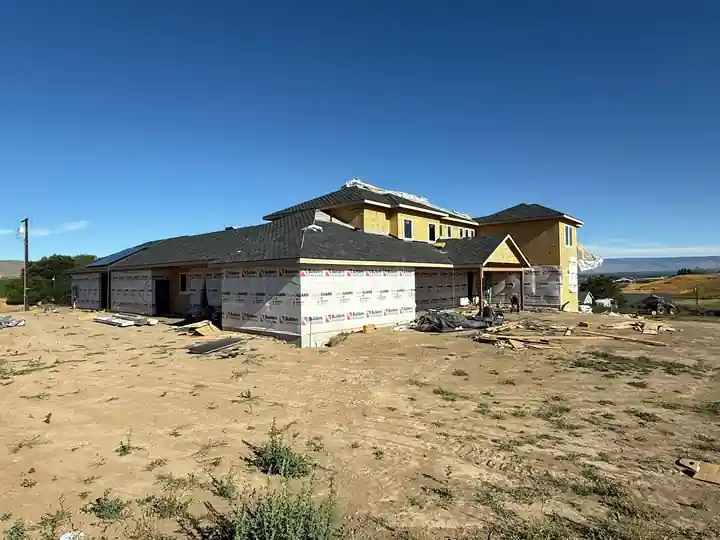
Most custom home delays don't come from hard work. They come from gaps. The excavator finishes on a Tuesday, the foundation crew can't start until the following week, the framer shows up and finds the anchor bolts off from where the plans call for them, and the roofer has been given a date the framer never heard. Every hand-off is a place where time and information leak out.
Where the hand-offs are
A typical custom build passes through the hands of an excavator, a foundation contractor, a framer and a roofer. If those are four separate companies, you have three hand-offs, and each one depends on the earlier crew finishing when they said they would and leaving things the way the next crew expects.
- Excavator to foundation: the pad has to sit at the right elevation and the footing trench has to match the plan. If it's off, the foundation crew either fixes it or waits for the excavator to come back.
- Foundation to framer: the walls have to be level, square and the right size, with anchor bolts where the framing plan needs them. Small errors here turn into trimmed sill plates and shimmed walls.
- Framer to roofer: the roof structure has to be framed, sheathed and ready before shingles can start, and the weather decides how fast the roof needs to go on.
- Roofer to everyone after: the house has to be dried in so siding, windows and interior trades can work out of the weather.
What changes when one crew owns the sequence
LF Construction & Excavating does the dirt, the footings and foundations, the framing and roofing, and the siding. That doesn't mean one person swings every hammer. It means one team is accountable for how the pieces fit together. The person who dug the footing trench is on the same job, and often the same morning, as the person who will frame on top of it.
That shows up in small ways. When one crew owns the whole sequence, the excavation can be set with the finished floor height in mind. The foundation gets anchor bolts where the framers asked for them. The framing is left ready so the roof can go on without rework. None of that is exotic. It just doesn't happen reliably when each company is only looking at its own scope and its own invoice.
The reverse is true too. When something goes wrong, there's one place to take it. Nobody can say the problem started with the last crew, because the last crew is the same crew.
What homeowners say about it
Several of the reviews on LF's Google page come back to this. A customer who goes by WormFarm wrote that after hiring two contractors who fell through, their permit was already valid and time was ticking. Then Alex took over: “From the dirt to roof top, Alex took care of all of it.” Sonny Tran wrote that Alex and Jose “completed our contract on time and on budget.” Ma Poage, building a first home, wrote that Alex was making it really easy for a family that doesn't know much about houses.
Those are three different projects with the same pattern: one point of contact, one crew, and fewer places for the schedule to leak.
Questions worth asking any builder
- Who checks the pad and trench against the plans before the foundation is formed?
- Who talks to the framer about anchor bolts and wall layout before concrete goes in?
- Who is my single point of contact when something changes?
- What happens to the order of work when the weather doesn't cooperate?
- Who walks the job with me at each stage?
One contact matters more than it sounds
Even with a single crew, things change. A window order comes back late, or a detail on the plans turns out not to fit the lot. What helps is a person who can make the call, adjust the order of work and tell you plainly what it means for the schedule. WormFarm credited Alex with “exceptional communication,” and that's the part of a build that rarely shows up in a plan set but you feel every week.
A custom home still takes time, and no crew controls the weather or the permit office. What you can control is how many times the job changes hands between the first scoop of dirt and the last shingle. Fewer is better.
To see how the work is organized, read the Custom homes page under Services, then call (509) 859-5594 to talk through your plans.
LF Construction & Excavating, (509) 859-5594
Call (509) 859-5594More articles
From Buying the Lot to Pouring Footings: What Happens in Between
On a hillside lot above the valley, the dirt work decides how the rest of the build goes, so here is the order it runs in.
LP Siding or Hardie? How to Think About Siding on a Yakima Valley Home
The product you pick matters, but what goes on the wall underneath it matters more.